How to Sell on Ebay UK for Beginners
Selling on eBay UK is one of the most accessible ways to turn unwanted items into cash or start a small online business from home. As a beginner, the platform can look a little overwhelming at first: there are fees to understand, listing options to choose from, and a lot of jargon that doesn’t mean much yet. The good news is that once you’ve walked through the basics step by step, the process becomes straightforward and surprisingly repeatable. You don’t need technical skills or business experience to get started, just some time and a bit of patience.
The key to early success on eBay UK is to treat your first few sales as a learning experience rather than a get‑rich‑quick scheme. You’ll experiment with different types of listings, refine how you write your descriptions, and learn how buyers behave on the platform. That early learning curve is normal, and even experienced sellers still test and tweak. By approaching it steadily, you’ll avoid common beginner mistakes like underpricing, underestimating postage, or accidentally breaking eBay’s rules.
This guide walks you through the essentials of selling on eBay UK as a complete beginner. First, you’ll get a clear picture of how selling works and what you should prepare before you even list an item. Then you’ll set up your seller account properly, including payment methods, postage options, and the basic settings that can save you headaches later. By the end, you’ll be in a solid position to list your first item with confidence and understand what happens after it sells.
Getting Started Selling on eBay UK as a Beginner
When you’re new to eBay UK, the best starting point is to decide what you want to sell and why. Some people begin by clearing out their home—old electronics, clothes, books, toys, or collectibles—just to get used to the system and earn some extra cash. Others already have an idea for a small business, such as reselling vintage clothing, refurbished tech, or handmade items. Starting with things you already own is usually safest, because it keeps your costs low while you learn. This way, every sale teaches you something without the pressure of recovering a big investment.
Before listing anything, spend time browsing eBay UK to understand pricing and demand. Use the search bar to look up items similar to what you want to sell, then filter by “Sold items” to see what actually sells and for how much. This is more useful than just looking at active listings, which might never sell at their current prices. Pay attention to listing formats too: some items perform better at auction (where buyers bid over a set time period), while others sell more reliably as “Buy It Now” with a fixed price. Observing how experienced sellers title their listings, take photos, and structure their descriptions can give you practical ideas to copy and adapt.
You should also get familiar with eBay’s basic rules, seller standards, and fee structure before you start. eBay UK charges fees based on the final sale price and sometimes on certain listing upgrades, and these vary a bit by category. Reading eBay’s help pages for sellers will give you an overview of final value fees, insertion fees (if applicable), and optional extras like bold titles or additional categories. While you don’t need to memorise everything, you should at least understand that fees will be deducted from what you earn and that eBay expects you to dispatch items on time and provide accurate descriptions. This upfront awareness helps you avoid surprises and ensures you don’t accidentally list anything that’s restricted or prohibited.
Recommended Reading
More in Side Hustles →

Setting Up Your First eBay UK Seller Account
To start selling on eBay UK, you first need a basic eBay account, which you can create using an email address, Apple ID, Google account, or Facebook login. When you sign up, choose a username that looks reasonably professional and isn’t confusing or offensive—you can change it later, but picking something sensible from the start helps. Once your account is created, you’ll need to verify your email and, in some cases, your phone number; this adds a layer of security and builds trust with both eBay and potential buyers. You can then switch your account to “selling” mode from the “Sell” link at the top of the page.
eBay UK now uses its own managed payments system, which means buyers pay eBay, and eBay pays you directly to your bank account. As part of setting up your seller account, you’ll be asked to provide your full legal name, address, date of birth, and bank details. This is normal and required for identity verification and payment processing regulations in the UK. Make sure the information is accurate and matches your official documents, as mismatched details can delay verification and payouts. You can choose how often eBay sends payouts (for example, daily or weekly), and it’s wise to keep an eye on your bank statements at first so you understand how fees and payments appear.
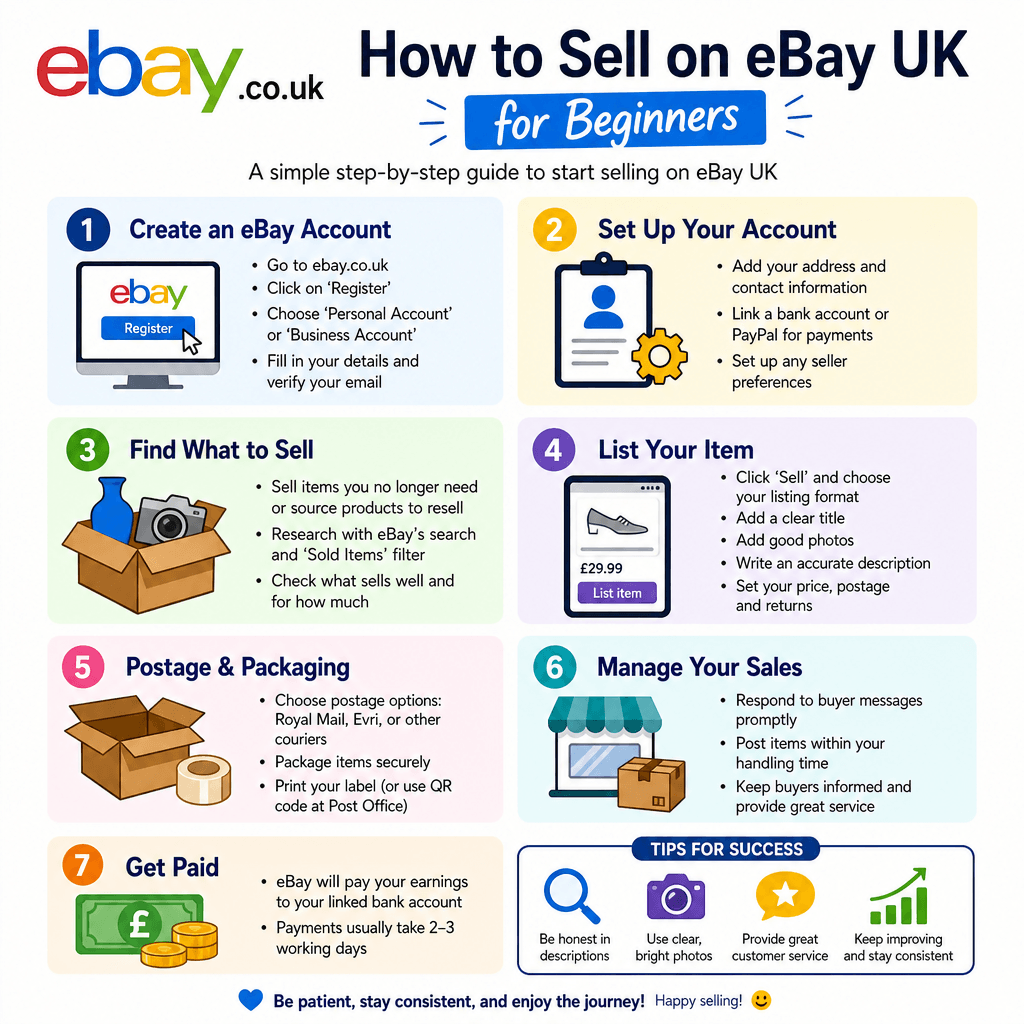
Finally, customise your seller settings before listing anything. In your account settings, you can set handling times (how quickly you’ll dispatch items), preferred shipping services (such as Royal Mail or couriers), and whether you’ll accept returns and on what terms. Setting realistic dispatch times and postage options matters, because they affect your visibility in search results and your buyer’s expectations. Consider starting with clear, simple terms—for example, second class post within two working days and a basic 30‑day returns policy—then adjust as you gain experience. Taking a few minutes to complete your seller profile, including a short description and a clear location, also helps new buyers feel more comfortable purchasing from you as a beginner.
Selling on eBay UK as a beginner is less about perfection and more about getting comfortable with the basics and learning from each sale. Once your seller account is set up correctly and you’ve tried a few low‑risk listings, you’ll quickly get a sense of what sells well, how to price effectively, and how to manage buyer expectations. Over time, you can refine your approach—improving photos, adjusting postage options, and experimenting with different types of products—to grow from casual seller to consistent earner. The most important step is starting, and with a clear structure and realistic expectations, you’re already well ahead of most new sellers.