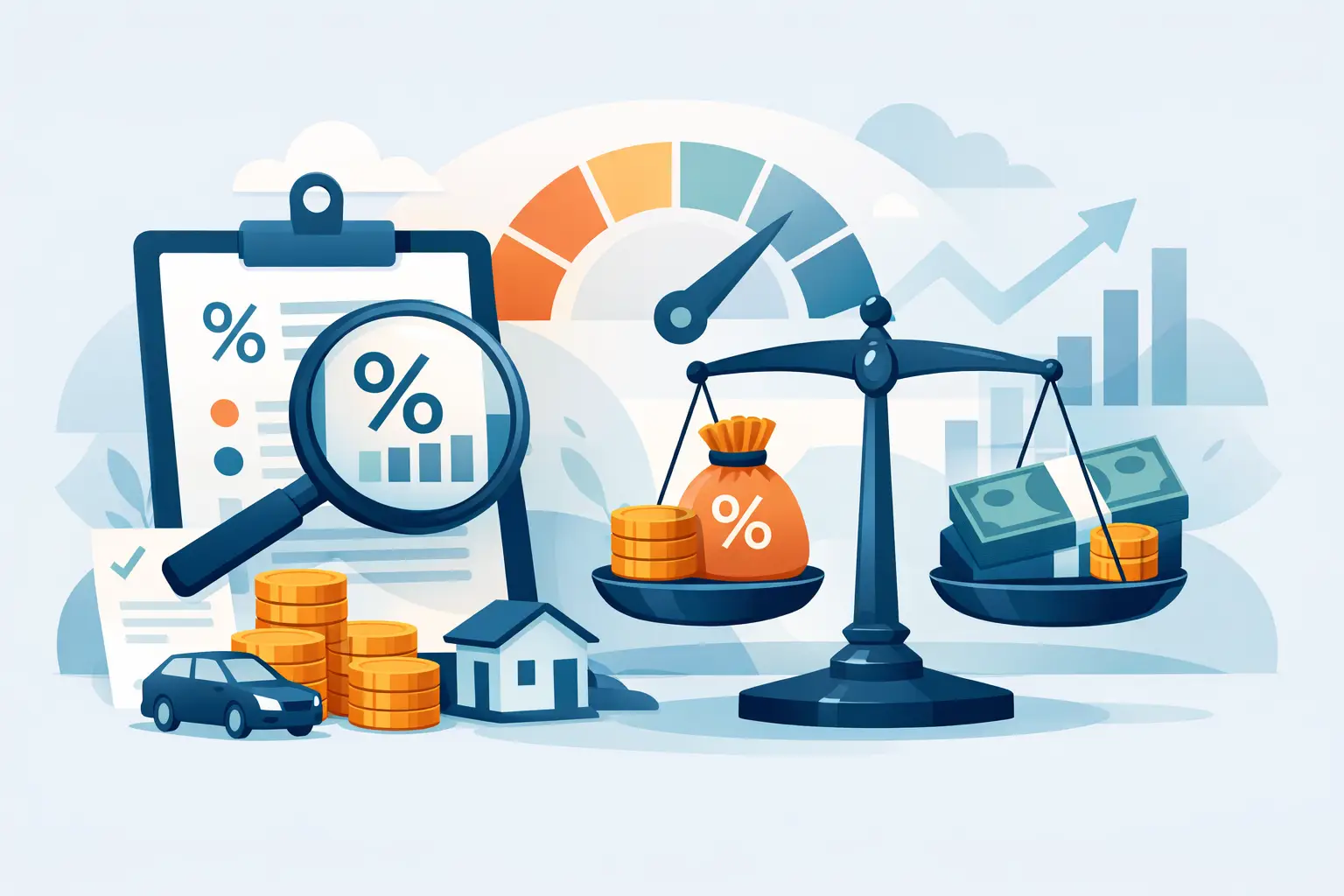
How to Compare Loan APR Properly
When you need money quickly, it is easy to focus on the monthly payment and click through the first offer that looks manageable. That is exactly why understanding how to compare loan APR matters. A low-looking repayment can still hide a more expensive deal overall, especially if the term is longer or extra charges sit outside the headline rate.
APR is meant to help you compare borrowing more fairly, but it only works if you know what you are looking at. For UK borrowers weighing up personal loans, bad credit loans, car finance or short-term credit, the smartest approach is to use APR as a starting point, not the whole answer.
What APR actually means
APR stands for Annual Percentage Rate. It shows the yearly cost of borrowing, including the interest rate and certain compulsory charges connected to the loan. The idea is simple: instead of comparing one lender’s monthly interest with another lender’s setup fee and another lender’s flat rate, APR gives you one figure to help compare deals on a like-for-like basis.
That sounds straightforward, but there is a catch. APR is most useful when the loans you are comparing are similar in amount and term. If one loan runs for 12 months and another runs for 5 years, the lower APR option will not always be the cheaper one in pounds and pence for your situation.
You will often see a representative APR. This means the advertised rate must be offered to at least 51% of accepted applicants. It does not guarantee that you will get that rate. If your credit history is limited or damaged, the lender may offer you a higher rate after reviewing your application.
How to compare loan APR without missing the bigger picture
If you want to compare loan offers properly, start with the same borrowing amount and the same repayment term. That is the cleanest way to judge whether one lender is more expensive than another.
For example, comparing £2,000 over 24 months with £2,000 over 24 months gives APR real value. Comparing £2,000 over 24 months with £5,000 over 60 months does not tell you much, because the products are built differently.
Once the loan amount and term are matched, check the total amount repayable. This is often more useful than APR on its own because it shows the full amount you would pay back by the end of the agreement. If lender A has a slightly higher APR but lower total repayment because of fewer fees, that could still be the better deal.
The monthly repayment matters too, of course. A cheaper loan overall is not much help if the instalments leave you short for rent, bills or food. The right loan is not only the lowest-cost option. It also needs to be affordable from one month to the next.
What APR includes and what it may not
APR usually includes interest and mandatory fees that form part of the credit agreement. It does not always capture every cost that could matter in real life.
This is where borrowers can get caught out. A loan with a competitive APR may still charge extra for late payments, early settlement in some cases, missed direct debits or optional add-ons. Those charges may not show up neatly in the APR figure.
That does not make APR useless. It just means you should treat it as one comparison tool, not the final verdict. When money is tight, even small fees can make a manageable loan turn into a stressful one.
Why a lower APR is not always the best deal
This is the part many people skip. A lower APR can look like a clear winner, but the structure of the loan still matters.
A longer term often lowers the monthly payment, which can feel like a relief. But spreading borrowing over more months may mean paying more interest overall. So you might see a loan that feels more affordable each month, while costing more in total.
The opposite can also happen. A shorter-term loan may have a higher monthly payment but a lower total borrowing cost. If you can comfortably afford it without stretching yourself, it may save you money.
There is no one-size-fits-all answer here. If your priority is keeping monthly outgoings low, a longer term may be necessary. If your priority is reducing total cost, a shorter term may suit you better. The best choice depends on your budget, not just the headline APR.
Recommended Reading



How to compare loan APR step by step
Start by writing down the exact amount you want to borrow. Then choose a realistic term based on what you can genuinely afford each month. Once you have those two details fixed, compare lenders on the same basis.
Look at the APR, then check the monthly repayment, then the total amount repayable. In that order, you get a much clearer picture. After that, read the key terms for charges, flexibility and repayment rules.
If a lender offers an eligibility check or quote that does not affect your credit score, use it where available. That can give you a more personalised view of the rate you may actually receive, rather than relying on a representative APR that may not apply to you.
If you are using a broker or comparison service, make sure you still read the lender’s final offer carefully. The matched option may be fast and convenient, but speed should not replace checking the numbers.
Comparing APR for bad credit loans
If you have bad credit, a thin credit file or a recent financial wobble, APRs are often higher. That can feel frustrating, but it is still worth comparing because rates and terms can vary widely between lenders.
In this part of the market, the difference between offers is not only about rate. Some lenders are more flexible around income types, employment status or credit history. Others may be quicker with decisions but charge more overall. When time is short, it is tempting to accept the first approval, yet even a quick second comparison can make a real difference.
Be especially careful with repayment terms. A high APR over a long period can become expensive very quickly. If you are borrowing to cover an urgent cost, focus on a deal you can repay reliably without falling into repeat borrowing.
Questions worth asking before you apply
Before taking any loan, ask yourself a few plain-English questions. What will this cost me in total? Can I afford the monthly repayments even if something changes this month? What happens if I pay late? Can I repay early, and if so, is there a charge?
Those questions matter because the cheapest-looking loan on screen is not always the easiest loan to live with. A transparent lender should make these points clear without hiding them in complicated wording.
It is also worth checking whether the figure shown is representative APR or your actual personalised rate. That one detail can completely change how attractive the offer really is.
The safest way to use APR
The safest way to use APR is to let it narrow down your shortlist, then make your decision based on total repayment and affordability. Think of APR as the signpost, not the destination.
For straightforward borrowing, that approach usually keeps things simple. Compare the same amount over the same term, check what you will repay overall, and make sure the monthly figure fits your budget without strain. If one loan is slightly cheaper but far less flexible, it may not be the best fit. If another costs a little more but gives you breathing room and clear terms, that can be worth it.
At Quick and Friendly Loans, we know most people searching for credit are not doing it for fun. They want clear answers, quick decisions and no nasty surprises. That is why understanding the numbers matters. A few extra minutes comparing APR properly can help you avoid a loan that looks friendly at first glance but feels far less friendly once repayments begin.
If you are comparing offers today, keep it simple: match the amount, match the term, check the total repayable, and only choose a repayment you can manage comfortably. Fast finance should still feel clear, fair and under control.