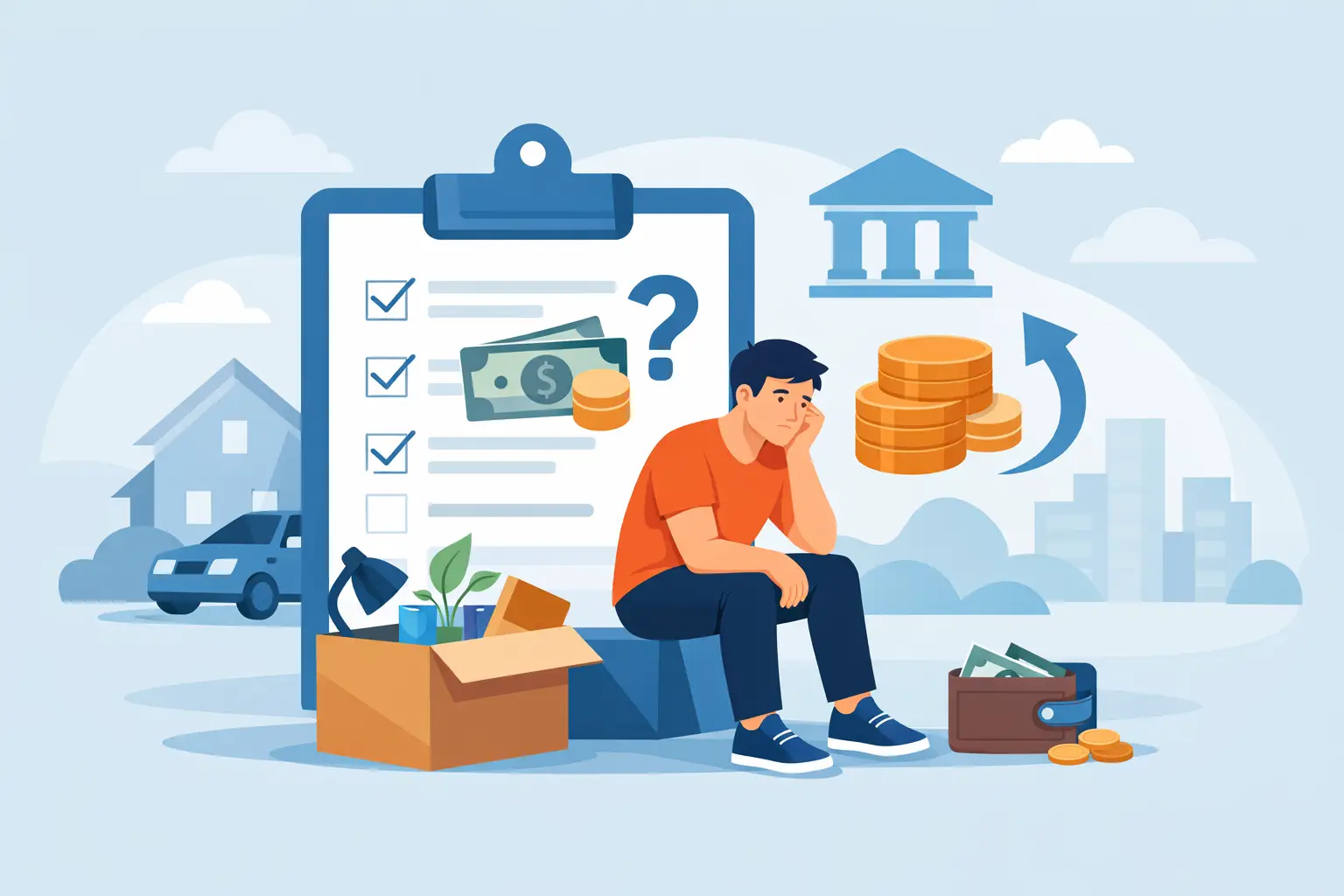
Can I Get a Loan While Unemployed?
If you need money quickly, it is natural to ask, can I get a loan while unemployed? The short answer is yes, sometimes – but it depends far less on your job title than many people think. UK lenders usually care most about whether you have a regular income, how affordable the repayments look, and how much risk your application presents.
That matters if you are between jobs, on benefits, recently self-employed, on a zero-hours contract, or relying on another source of income that does not fit a traditional nine-to-five. Being unemployed does not automatically rule you out. It does mean lenders will look more closely at how you plan to repay.

Can I get a loan while unemployed in the UK?
Yes, you may still be able to get a loan while unemployed in the UK, but approval is never guaranteed. Lenders and credit brokers look at affordability first. If you can show enough regular income to cover both your normal living costs and the new loan repayment, some lenders may consider your application.
This is where many people get caught out. They assume “unemployed” means “ineligible”. In practice, some lenders accept applications from people who are not in full-time work, provided they have another acceptable source of income. Others will only lend to employed applicants. It varies across the market.
For that reason, a wide lender panel can help. Instead of applying one by one and risking repeated declines, many borrowers prefer a simple online eligibility check that looks for lenders more likely to match their circumstances.
What income can count if you are unemployed?
Being unemployed does not always mean having no income. A lender may consider income from benefits, pensions, maintenance payments, rental income, part-time work, freelance work, or other regular household income. Some lenders are stricter than others, and some types of income are more widely accepted than others.
The key word is regular. A one-off payment or money borrowed from family is unlikely to reassure a lender. Consistent money coming in each month is far more helpful because it gives them a clearer picture of affordability.
If your income changes from month to month, that does not automatically mean no. It may simply mean the lender asks for more detail. Bank statements often matter more in these cases, because they show what is really coming in and going out.
What lenders usually check
When someone asks, can I get a loan while unemployed, what they are really asking is whether a lender will trust them to repay on time. Most lenders look at four things: your income, your outgoings, your credit history, and your recent borrowing behaviour.
Income is only one part of the decision. If you have a modest but steady income and low monthly commitments, you may look more affordable than someone earning more but already stretched by rent, credit cards and existing loans.
Your credit file also matters, though not always in the way people expect. A perfect score is not essential for every lender, but missed payments, defaults, County Court Judgments or a lot of recent applications can make approval harder. Thin credit files can also be a challenge, because the lender has less evidence to work with.
Bank statements may be reviewed as well. These can highlight gambling transactions, repeated overdraft use, returned payments, or signs that your budget is already under pressure. That does not mean every issue leads to a decline, but it can affect which lenders are willing to consider you.
Which loan types might be available?
If you are unemployed, the loan options open to you will depend on your circumstances, income and credit profile. Smaller short-term loans may be available in some cases, especially where the lender is comfortable that the repayments are manageable. Personal loans with longer terms may also be possible for stronger applicants with stable alternative income.
Some borrowers look at guarantor loans, where another person agrees to cover repayments if they cannot. This can improve the lender’s confidence, but it is a serious commitment for the guarantor and should never be treated casually.
Homeowners may see secured borrowing options as well, but these come with much higher stakes because your home may be at risk if you do not keep up repayments. That kind of borrowing can look easier to access, yet it is not automatically the right answer for a short-term cash gap.
What is rarely a good idea is taking the first offer purely because the money is urgent. Fast decisions are useful. Rushed borrowing is not.
Recommended Reading



Can I get a loan while unemployed with bad credit?
You might, but the cost and choice of lenders can change. Bad credit plus unemployment creates a higher-risk application, so fewer lenders are likely to say yes. Those that do may offer smaller amounts, shorter terms, or higher interest rates.
This is where honesty helps. If your credit history has problems, trying to hide them serves no purpose because lenders will usually see them during checks. What can help is making sure the rest of your application is clear, accurate and realistic.
If you are borrowing to cover an emergency, focus on what you actually need rather than the maximum amount advertised. A smaller loan with repayments you can comfortably manage is usually easier to get approved for and easier to clear without creating another problem next month.
How to improve your chances
The quickest way to weaken an application is to guess. Before applying, work out exactly what money comes in each month and exactly what goes out. Include rent, council tax, food, travel, mobile bills, childcare and existing credit commitments. If the numbers are tight, borrowing may not be the safest option right now.
If the figures do stack up, keep the application consistent. Use the same details across your form, bank records and credit file where possible. Small mismatches can create delays, and bigger ones can lead to a decline.
It also helps to ask for a realistic amount. Borrowing £300 to cover a repair is very different from applying for £5,000 without employment. Lenders want to see that the request fits your situation.
Finally, avoid making lots of full applications in a short space of time. Too many hard searches can make lenders nervous. A broker service like Quick and Friendly Loans can be useful here because it helps match applicants with suitable lenders without turning the process into a string of random applications.
When a loan may not be the right move
Sometimes the answer to can I get a loan while unemployed should be followed by a different question: should I? If your only income is already stretched, adding another monthly repayment can make things worse very quickly.
That is especially true if the loan is being used for regular living costs rather than a one-off emergency. Borrowing to plug a short gap can be manageable in the right circumstances. Borrowing every month to cover basics is usually a sign that the pressure is bigger than one loan can solve.
If you are already missing payments elsewhere, think carefully before taking on more credit. Approval might still be possible, but affordability is what matters most. A lender saying yes does not always mean the loan is a good fit for your budget.
What to have ready before you apply
A faster application usually comes down to having your details ready. Most lenders or brokers will ask for proof of identity, UK address history, details of your income, monthly expenses, and your bank account information. Some may also ask for recent bank statements or evidence of benefits or other income.
If you fill everything in clearly and accurately, decisions can often be made quickly. If details are missing or inconsistent, the process slows down. That can be frustrating when money is urgent, so a little preparation goes a long way.
The bottom line on unemployed loan applications
So, can I get a loan while unemployed? Yes, in some cases you can – especially if you still have regular income and the repayments are affordable. What matters most is not simply whether you have a job, but whether a lender can see a clear and realistic route for repayment.
If you decide to apply, keep it simple. Borrow only what you need, be honest about your circumstances, and look for a lender match that fits your income rather than pushing beyond it. Fast finance can be helpful at the right moment, but peace of mind usually starts with a repayment you know you can handle.