Secured Loans vs Unsecured: Which Fits?
When money is tight, the difference between secured loans vs unsecured borrowing can affect far more than your monthly payment. It can change how much you can borrow, how quickly you get a decision, and what you stand to lose if things do not go to plan. If you are weighing up your options, the right choice usually comes down to one question: are you trying to keep risk low, or improve your chances of being approved for the amount you need?
For many UK borrowers, that choice happens under pressure. A car repair, overdue bill, moving cost or debt consolidation plan does not always leave much time for research. So let us keep it simple, clear and useful.
What is the difference between secured loans vs unsecured?
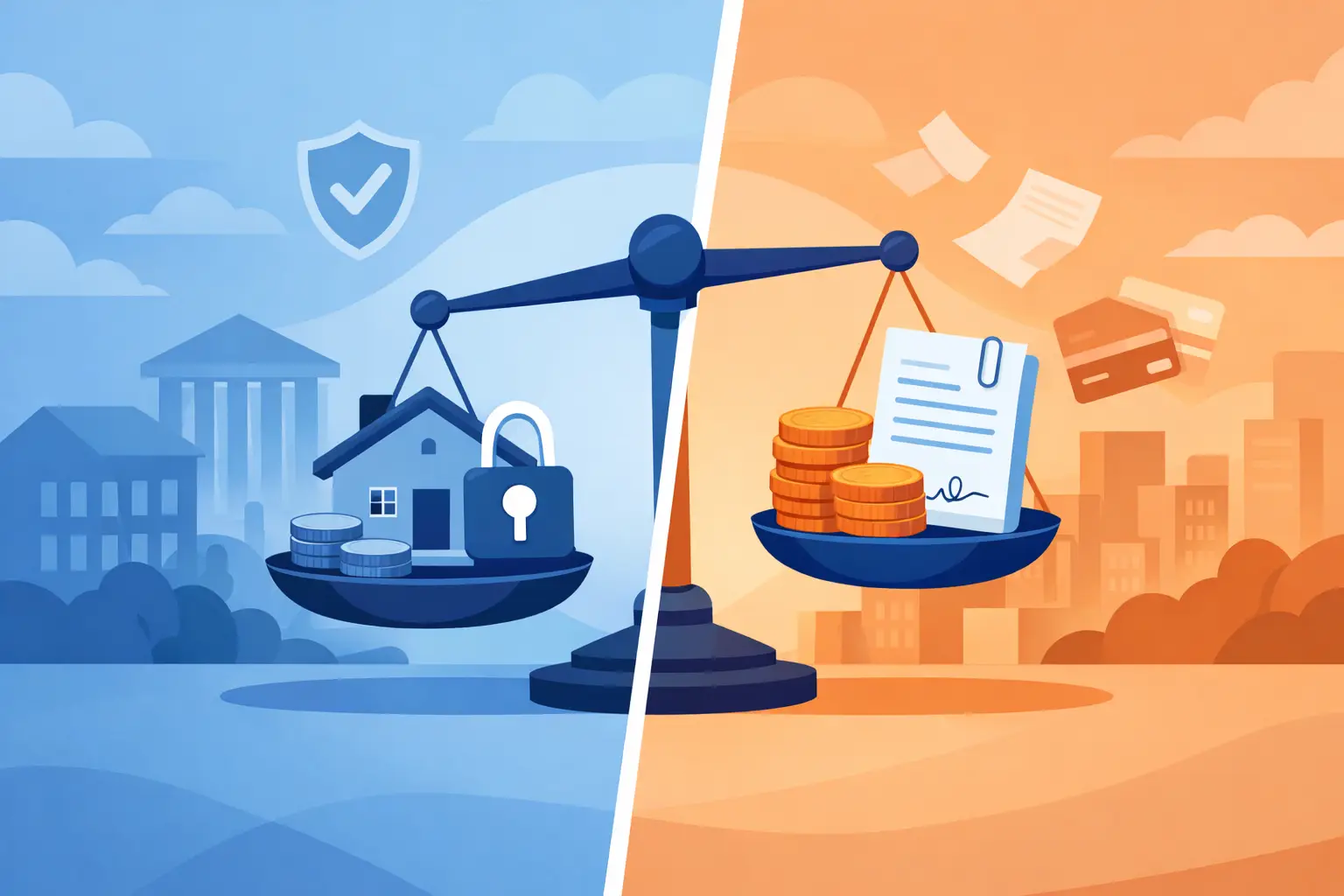
A secured loan is tied to an asset, usually your home or sometimes your car. That asset acts as security for the lender. If you keep up with repayments, nothing changes. If you fall behind and cannot agree a solution, the lender may be able to take steps to recover what they are owed from the secured asset.
An unsecured loan does not use an asset as security. Approval is based more heavily on your credit history, income, affordability and overall financial profile. Because the lender takes on more risk, unsecured borrowing can come with lower loan amounts, shorter terms or higher rates, especially if your credit is poor.
That is the core split. Secured usually means more borrowing power and potentially lower monthly costs over a longer term. Unsecured usually means less risk to your property, a simpler application and, in some cases, a faster route from application to payout.
Related Posts:



When a secured loan may make sense
Secured loans are often considered by homeowners who need to borrow a larger amount or want to spread repayments over a longer period. If you need several thousand pounds and your credit history is less than perfect, a secured loan may open up options that would not be available with an unsecured product.
This can be useful for major expenses such as home improvements, larger debt consolidation plans or a significant one-off bill. Because the lender has security, they may be more flexible on eligibility. That does not mean guaranteed approval, but it can help if past credit issues have made mainstream borrowing harder.
There is a trade-off, and it is a serious one. Your home may be at risk if you do not keep up repayments. That is why a secured loan should not be treated as an easy fix for a short-term gap. It is better suited to planned borrowing where the amount is larger, the repayment term is manageable and you are confident the monthly cost fits your budget.
When unsecured borrowing may be the better option
If you need a smaller amount, want to avoid using your home as security, or simply prefer a more straightforward arrangement, unsecured borrowing will often feel more comfortable. Personal loans, short-term loans and some bad credit loan products fall into this category.
For many people, the biggest advantage is peace of mind. You are not putting your property on the line. The application can also be more direct, with fewer checks linked to ownership of an asset. If speed matters, unsecured finance can sometimes move faster because there is less to assess around the security.
The downside is that approval can be tougher if your credit file is weak or your income is stretched. Even when accepted, you may be offered a lower amount than you hoped for, or a higher rate than a secured alternative. That does not automatically make unsecured borrowing a bad deal. For shorter terms and modest sums, it can still be the more sensible route.
Cost is not just about the interest rate
A lot of borrowers focus on APR first, which is understandable, but that only tells part of the story. A secured loan may come with a lower rate, yet cost more overall if you repay it over many years. An unsecured loan may have a higher rate, but if the term is shorter, the total repayable could still be lower.
Monthly affordability matters just as much. Spreading repayments can make a larger loan feel manageable, but long terms mean interest has more time to build. If you are comparing offers, look at the monthly payment, the total amount repayable and any fees or charges for late payment.
This is where people can get caught out. The cheapest monthly option is not always the cheapest loan. The best fit is the one you can comfortably afford without needing to borrow again to cover the repayments.
Credit score, approval and real-world borrowing
If your credit history is strong, you may have a broader choice of unsecured products and more competitive pricing. In that case, taking an unsecured loan can be an easy decision because you avoid the extra risk of a secured arrangement.
If your credit history includes missed payments, defaults or a thin file, lenders may see you as higher risk. That does not mean you have no options. It does mean the type of loan you qualify for may change. Secured lending can sometimes improve approval chances because the lender has security behind the agreement.
Even so, lenders still look at affordability. They will want to see that the repayments are realistic based on your income and regular outgoings. Security helps, but it does not replace the need for a sensible budget.
This is why being honest on your application matters. Inflating income or leaving out regular costs may lead to problems later, especially if the repayments become hard to manage.
Secured loans vs unsecured for bad credit
This is often where the comparison becomes most practical. If you have bad credit and need a smaller amount quickly, an unsecured bad credit loan may be enough. It can be faster, involve less paperwork and remove the worry of linking the debt to your home.
If you need a larger amount and your past credit issues are blocking standard personal loan options, a secured loan may be one of the few realistic routes left. That can be helpful, but it also means the decision deserves extra care. A larger amount over a longer term can ease immediate pressure while creating a longer financial commitment.
There is no one-size-fits-all answer here. If the problem is short term and the amount is modest, unsecured borrowing may keep your risk lower. If the amount is higher and your budget is stable enough for longer repayments, secured lending may offer a more workable path.
Questions to ask before you choose
Before taking either option, think less about what you can borrow and more about what you can repay without stress. Ask yourself how urgent the expense really is, whether the amount could be reduced, and how your budget would cope if another bill landed next month.
If you are considering a secured loan, ask one extra question: am I comfortable putting my home or other asset at risk for this purpose? That question cuts through a lot of sales language very quickly.
If you are considering unsecured borrowing, ask whether the monthly payment still works if the rate is higher than the headline figure you saw advertised. Representative APRs are not offered to everyone.
For borrowers who want speed without the hassle of checking multiple lenders one by one, a broker such as Quick and Friendly Loans can help match you with lenders based on your circumstances. That can save time, especially if your credit profile is not perfect, but you should still compare the actual offer in front of you rather than relying on assumptions.
How to decide with confidence
Choose secured borrowing if you need a larger amount, can commit to the repayments over time, and understand the risk attached to the asset. Choose unsecured borrowing if you want a simpler application, prefer not to use your property as security, or only need a smaller amount over a shorter term.
Neither option is automatically better. The right loan is the one that solves the problem without creating a bigger one six months from now. Fast access to credit can be a relief, but the best decisions are usually the ones that still look sensible after the urgency has passed.
If you are unsure, slow the process down just enough to check the numbers properly. A few extra minutes spent looking at repayment terms, total cost and risk can save a great deal of pressure later.