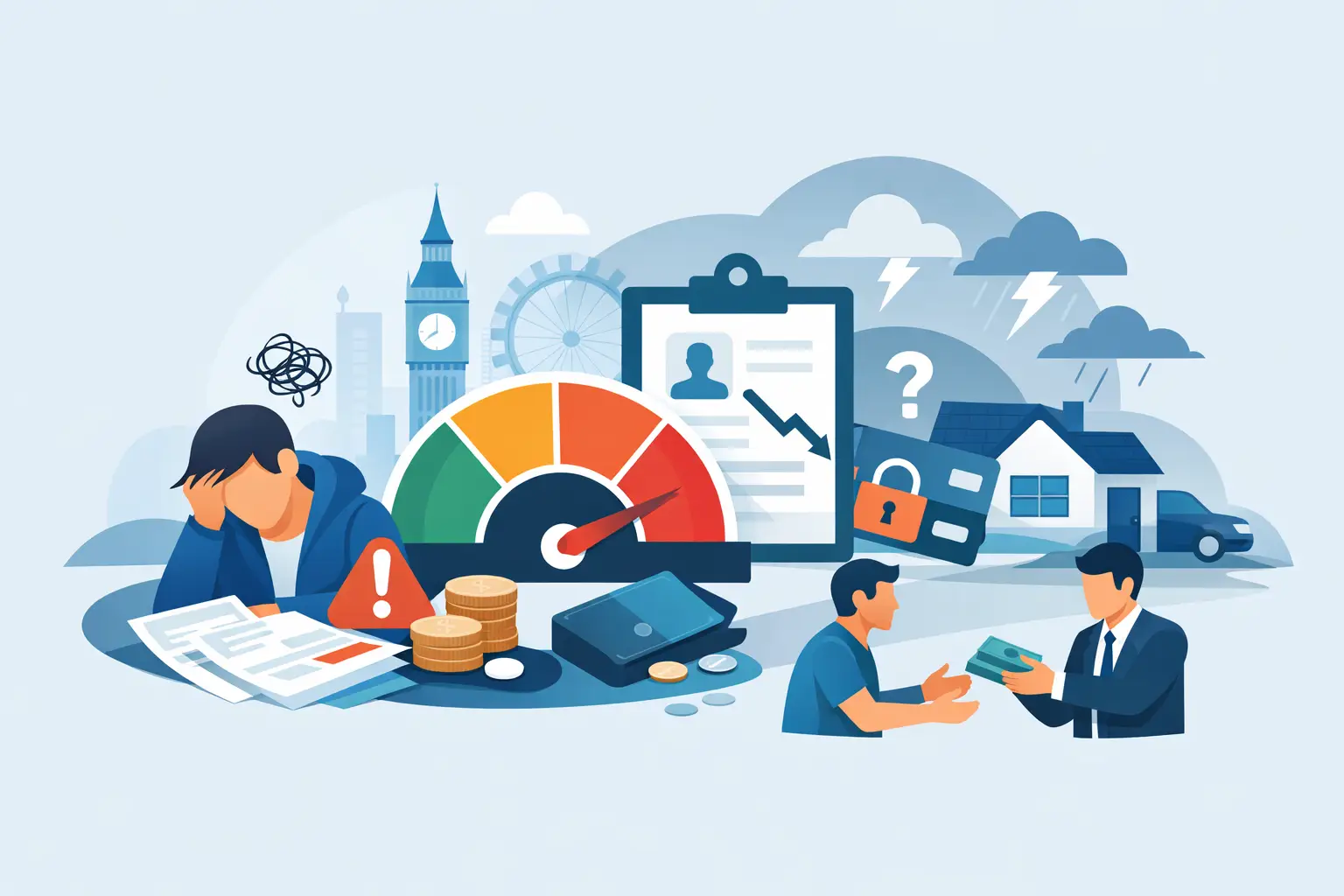
A Guide to Bad Credit Borrowing in the UK
A missed payment, a thin credit file or a past financial setback does not automatically mean you cannot borrow. This guide to bad credit borrowing explains what your options may look like, what lenders check and how to make a clear-headed decision when you need money quickly.
Bad credit borrowing can help with a genuine short-term gap, such as an urgent repair, a bill that cannot wait or essential travel costs. But a loan should solve a problem, not push it into next month. The right option depends on how much you need, how soon you can repay it and whether the repayments fit comfortably alongside your regular household costs.
What does bad credit borrowing mean?
Bad credit borrowing is simply borrowing designed for people who may not meet the strict criteria used by high street banks. You may have a low credit score because of missed payments, defaults, County Court Judgments, a previous debt arrangement or limited credit history. Lenders look at each application differently, so a poor score is not the only factor.
They will usually consider your income, regular outgoings, employment situation, existing borrowing and ability to repay. Some lenders may be more open to applicants with adverse credit than others, but approval is never guaranteed. The amount you can borrow and the rate you are offered will depend on your individual circumstances.
A credit broker such as Quick and Friendly Loans can introduce applicants to a panel of lenders and loan providers. A broker does not make the lending decision or provide the loan itself. Its role is to help match your details with providers whose criteria may suit your needs.
Related Posts:




Start with the amount you really need
When money is tight, it is tempting to apply for the largest amount available. In practice, borrowing only what you need can make the loan easier to manage and reduce the total cost of credit.
Write down the exact expense you are covering, then look at your next pay dates and essential commitments. Rent or mortgage payments, council tax, utilities, food, travel, childcare and existing credit payments should come first. What remains is a more realistic guide to what you could afford to repay.
A useful test is simple: if an unexpected £50 expense would make the repayment difficult, the loan may be too large or the term may be too short. Consider reducing the amount, extending the term if this lowers the monthly payment, or looking at another solution. A longer term can ease monthly pressure, though it may increase the overall amount repaid.
Compare the types of bad credit loans available
There is no single best loan for every credit situation. The product needs to match both the purpose of the borrowing and your repayment plan.
Short-term and same-day loans
Short-term loans are generally for smaller borrowing amounts and are repaid over weeks or months. They may suit an urgent, one-off cost where you know when the money will be available to repay. Some lenders can make a decision quickly and, where approved, funds may reach your bank account on the same day. Timing is not guaranteed and can depend on the lender, your bank and when the agreement is completed.
The trade-off is cost. Short-term credit can carry a higher interest rate than longer-term borrowing, so always check the total amount repayable rather than focusing only on the monthly figure.
Personal loans for bad credit
An unsecured personal loan may allow you to spread the cost over a longer period. This can be useful for a larger essential expense, such as replacing a broken appliance or covering necessary car repairs. Regular fixed repayments can make budgeting simpler, but missing them can harm your credit record further and lead to extra charges.
Guarantor and secured borrowing
A guarantor loan involves another person agreeing to cover the repayments if you cannot. That is a serious commitment for both of you, so the guarantor should understand the full agreement and be able to afford the risk.
Secured loans are linked to an asset, commonly your home. They may offer larger amounts or longer terms, but the risk is much greater. Your home could be at risk if repayments are not maintained. Secured borrowing is not usually a quick fix for a small cash-flow problem.
Car finance and other specialist options
If the need is for a vehicle, specialist car finance may be more appropriate than taking out a general-purpose loan. The same principle applies: compare the total cost, the deposit, monthly payments and what happens if your circumstances change. Do not choose a product simply because the initial payment looks low.
Check the true cost before you apply
The representative APR is a useful comparison tool, but it is not a promise that you will receive that rate. It shows the rate that at least 51% of accepted applicants are expected to receive. With bad credit borrowing, your personal rate may be higher.
Before accepting any offer, check the amount borrowed, the repayment schedule, interest, total amount repayable and any charges that could apply if you miss a payment. Read whether you can repay early and whether doing so changes the cost. A clear lender should give you this information before you sign an agreement.
Do not let urgency make the decision for you. A quick online application can be helpful, but you still have the right to pause, read the terms and decline an offer that does not work for your budget. No legitimate lender should pressure you to accept finance immediately or ask you to pay an upfront fee to release a loan.
How to apply without making things harder
A straightforward application usually asks for basic personal information, address history, employment details, income and regular spending. Providing accurate information matters. Lenders use it to assess affordability, and incorrect details can delay a decision or lead to a declined application.
It can help to have recent bank details, your monthly income and a clear list of existing credit commitments ready before you start. This makes it easier to answer affordability questions honestly rather than guessing.
Check how your credit file may be searched. A soft search does not normally affect your credit score and can be used for an eligibility check. A hard search is recorded on your credit file and may be visible to other lenders. Several hard searches in a short period can make future borrowing more difficult, so avoid submitting repeated applications blindly.
When a loan may not be the right answer
Bad credit loans are not suitable for every situation. If you are already struggling to make repayments, using new borrowing to cover old borrowing can become expensive quickly. It may be better to speak to your existing provider about a payment arrangement, ask a bill company whether it can offer more time, or get free debt advice before taking on another commitment.
You may also have alternatives depending on the expense. An employer salary advance, support from your local council, a credit union or a realistic payment plan can sometimes cost less than high-cost credit. These routes are not available to everyone, but they are worth checking when the expense is not immediate.
Avoid borrowing for non-essential spending, gambling, investments or to lend money to someone else. If the repayment relies on overtime that is not guaranteed, a bonus you have not received or another loan being approved later, it is a sign to step back.
Use borrowing to regain control, not lose it
If you choose to go ahead, set up the repayment in a way that works with your pay cycle and keep enough in your account for the due date. If you think you may miss a payment, contact the lender as early as possible. Ignoring the issue rarely improves it, while early contact may give you more options.
Bad credit does not define you, and it does not mean you need to accept the first offer put in front of you. Take the time to check affordability, compare the full cost and borrow only when the repayment leaves room for everyday life. A loan that is clear, manageable and used for the right reason can be a practical step forward.