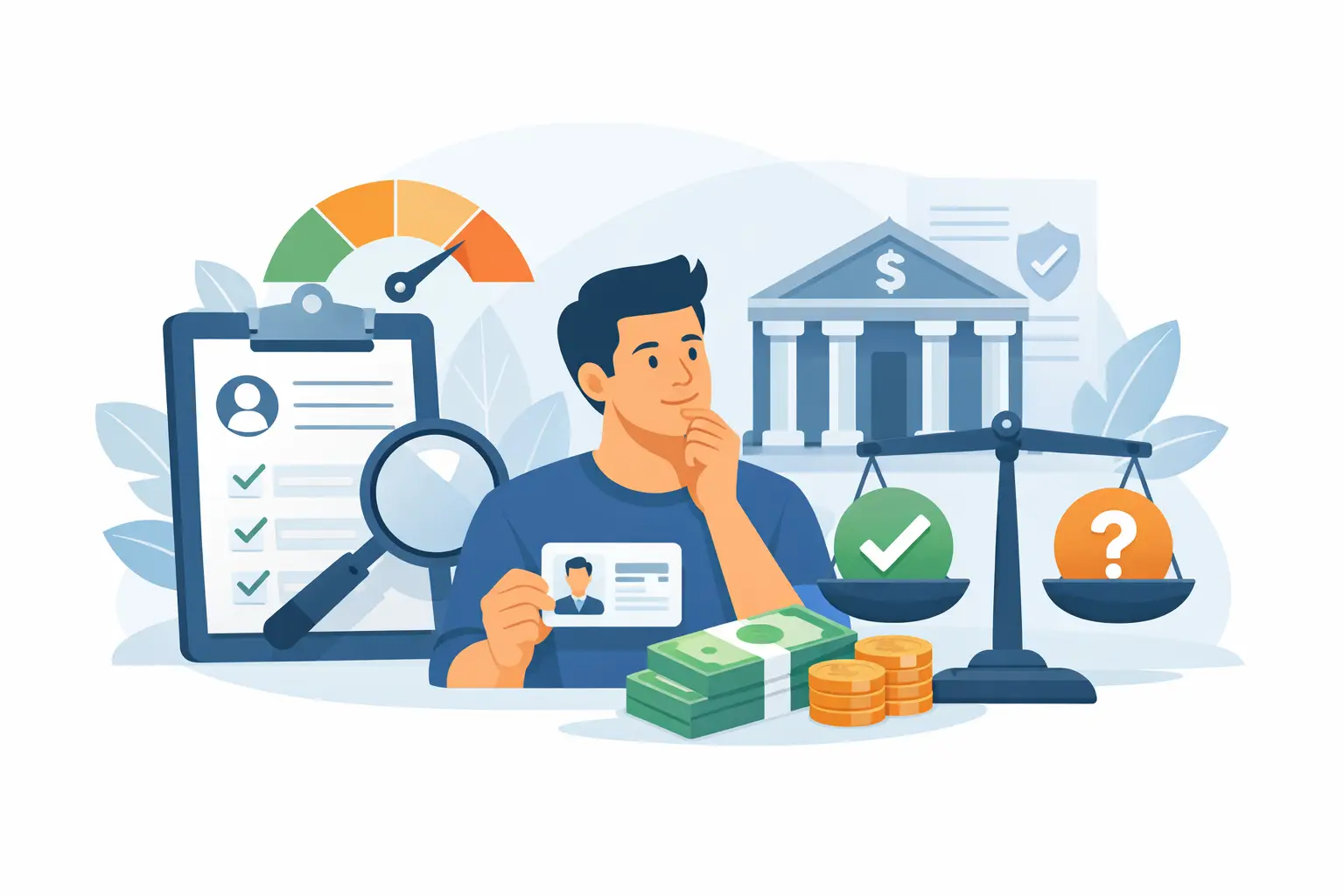
How Payday Loan Eligibility Works
When money is tight, the last thing you want is a vague answer from a lender. If you’re trying to understand how payday loan eligibility works, the good news is that the checks are usually quite straightforward. Most lenders are looking for signs that you can afford the loan, that your details are genuine, and that the borrowing matches your current circumstances.
That does not mean every application is approved, and it does not mean credit history is ignored. But payday loan eligibility is often more flexible than many people expect, especially when compared with a high street bank. If you have bad credit, a limited credit file, or you’ve been turned down elsewhere, you may still have options.
How payday loan eligibility works in the UK
At its core, eligibility is about risk and affordability. A lender wants to know whether you meet its basic criteria and whether repaying the loan is realistic based on your income and regular outgoings. Because payday loans are short-term credit, the checks tend to focus on your current financial position rather than just your past borrowing history.
Most UK lenders will start with a few basic requirements. You normally need to be at least 18, a UK resident, and able to provide a valid mobile number, email address, and bank account. You will usually need a regular source of income as well. That income does not always have to come from full-time employment, but lenders will want to see that money comes in consistently enough to support repayments.

From there, the lender may look at your credit profile, recent payment behaviour, and bank transaction patterns. Some lenders use automated checks to give a decision in minutes, while others may review applications more closely if the case is less clear.
Related Posts:




What lenders usually check
The first thing many lenders look at is identity. They need to confirm that you are who you say you are and that your address and contact details match up. This helps with fraud prevention and is a standard part of responsible lending.
The next key check is income. Lenders want to know how much you receive, how often you are paid, and whether that income appears stable. If you are employed, this may be based on wages paid into your bank account. If you are self-employed or receive certain benefits, some lenders may still consider your application, but they may look more carefully at how predictable that income is.
Affordability is where many decisions are really made. A lender may look beyond your income figure and consider what goes out each month. Rent or mortgage payments, utility bills, existing credit commitments, childcare costs and other regular expenses all affect what is affordable. A higher income does not always mean automatic approval if outgoings are already heavy.
Credit history can still play a part, but not always in the way people assume. A missed payment in the past may not stop you being accepted. What matters more is the overall picture. Recent defaults, active arrears, repeated missed payments, or signs of financial strain may reduce your chances. On the other hand, a thin credit file is not always a deal-breaker if the rest of your application is strong.
Bad credit does not always mean no
Many people searching for short-term borrowing assume that bad credit means there is no point applying. That is not always true. Some lenders are open to applicants who have had credit problems before, provided they can show current affordability.
This is one reason credit brokers can be useful. Rather than relying on one lender with one set of rules, a broker can help match your details with lenders whose criteria may be better suited to your situation. For someone with defaults, a low credit score, or limited borrowing history, that can make the process feel a lot less hit-and-miss.
Still, there is a difference between poor credit and unaffordable borrowing. If your income does not cover your existing commitments, approval may be less likely regardless of your score. Responsible lenders should not approve a loan that clearly puts more pressure on your finances.
What can affect your chances of approval
Small details can make a bigger difference than people expect. One common issue is inconsistency on the application form. If your address history, income details or employment information do not line up with what a lender can verify, that may trigger a decline or a request for more checks.
Your bank account activity can matter too. Some lenders use open banking or account analysis to review income and spending patterns. Frequent gambling transactions, repeated unpaid direct debits, or signs that your account is regularly overdrawn may affect the decision. That does not mean one imperfect month will always cause a rejection, but patterns matter.
Loan amount also plays a part. Asking for a smaller amount can sometimes improve your chances because the repayment is easier to fit within your budget. If you ask for more than your income comfortably supports, the lender may decline the application or offer a lower amount instead.
Timing can matter as well. If you have recently changed jobs, moved house, or had a drop in income, lenders may see that as added uncertainty. Equally, if your finances have improved recently, it may help to wait until your bank statements reflect that more clearly.
How to improve payday loan eligibility
If you are wondering how payday loan eligibility works in practical terms, think of it as a basic test of clarity, stability and affordability. You do not need a perfect financial profile, but you do need to give the lender enough confidence to say yes.
Start by checking that all your details are accurate. Use your current address, your correct income figure, and the same information that appears on your bank records and other official documents. Even simple errors can slow things down.
It also helps to be realistic about what you can afford. Borrowing only what you need can make approval more likely and reduce the risk of repayment problems later. If your budget is already stretched, it may be worth considering whether a different type of credit or a smaller amount would be safer.
Keeping your bank account in better order before applying can also help. That might mean avoiding failed payments, reducing unnecessary spending, or waiting until you have a regular income payment showing in your account. Lenders are not expecting perfection, but they are looking for reassurance.
Common myths about payday loan eligibility
One common myth is that anyone with a job will be approved. Employment helps, but it is not the only factor. If your outgoings are too high or your account shows signs of ongoing financial pressure, a lender may still say no.
Another myth is that benefits claimants are always refused. In reality, some lenders may consider certain benefit income, especially if it is regular and the overall application is affordable. Policies vary, so it often depends on the lender.
People also assume that every application destroys their credit score. That is not always the case. Some providers use eligibility checks or soft searches before a full application is made. The exact process depends on the lender, but checking your options first can be a sensible move.
Why decisions can be fast
Online lending is built for speed. Many lenders use automated systems that can review identity details, credit data and affordability indicators within minutes. That is why some applicants get a near-instant decision and, if approved, could receive funds the same day.
Fast does not mean careless, though. FCA-authorised lenders still need to carry out checks, and genuine providers should be clear about costs, repayment terms and what happens if you miss a payment. A quick application should still give you enough information to make the right choice.
For borrowers under pressure, that balance matters. You want speed, but you also want clarity. No hidden fees. No confusing wording. Just a straightforward answer on whether the loan is likely to fit your situation.
If you’re declined
A decline does not always mean you will never be accepted. It may simply mean that lender’s criteria were not the right fit at that time. Different lenders assess risk in different ways, and some are more flexible than others.
If you are declined, it can help to review the basics. Was your income entered correctly? Were you asking for more than you needed? Has your credit file changed recently? In some cases, waiting until payday, reducing the amount, or applying through a service such as Quick and Friendly Loans that can connect you with a wider panel may give you a better chance.
Borrowing should feel clear, not intimidating. The more you understand what lenders are looking for, the easier it becomes to check your options with confidence and choose a loan that genuinely fits your budget.