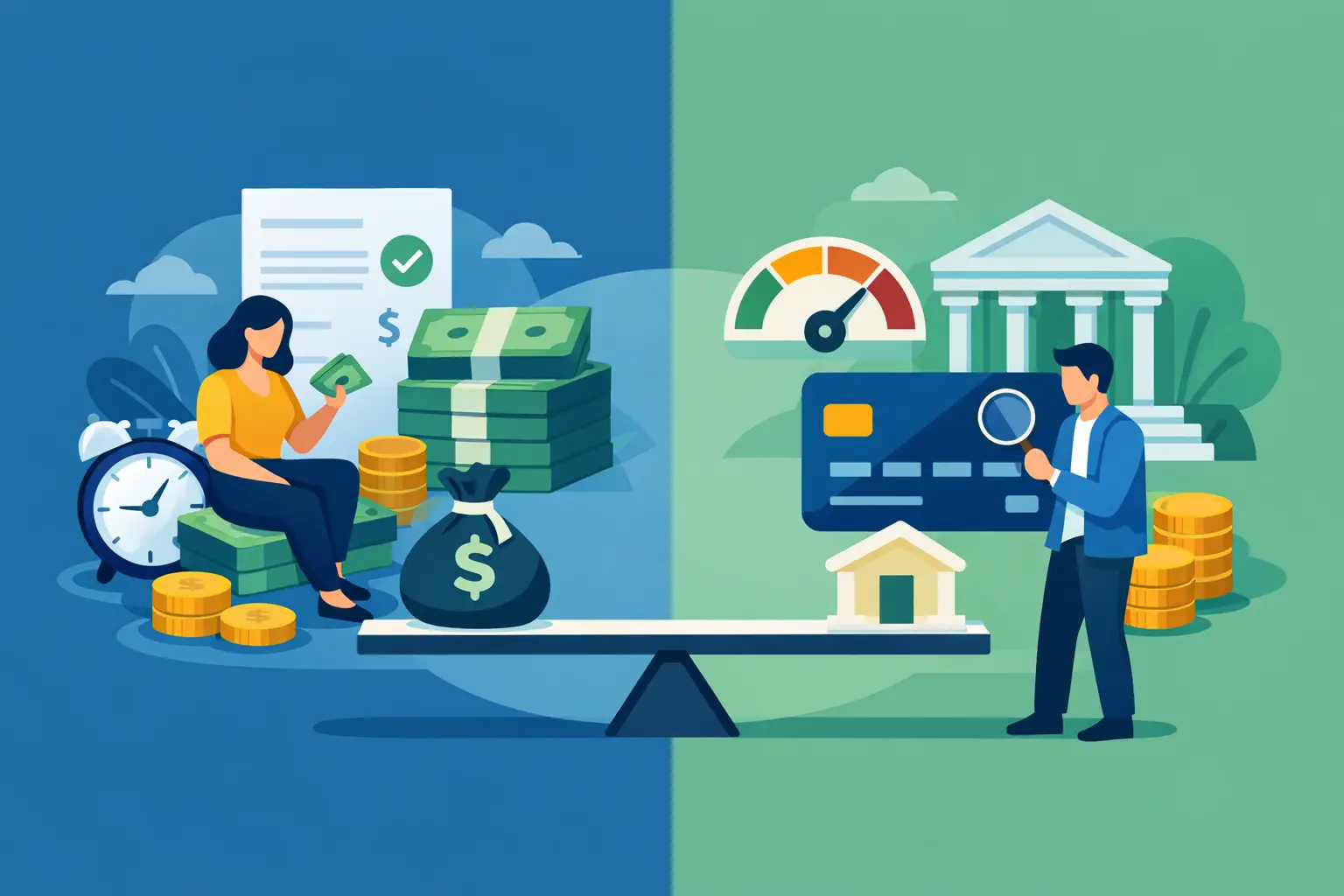
Payday Loans vs Overdraft: Which Costs Less?
A £100 gap before payday can feel much bigger when your direct debit is due tomorrow. If you are weighing up payday loans vs overdraft, the right choice depends on what is available to you, how much you need and, crucially, how quickly you can repay it.
Both can provide short-term breathing space, but they work very differently. An arranged overdraft is linked to your current account. A payday loan is a separate, fixed-term credit agreement. Looking beyond the headline rate can help you avoid borrowing more than you need or leaving a balance running for longer than planned.
Payday loans vs overdraft: the key difference
An overdraft lets you spend more than the money in your bank account, up to an agreed limit. For example, if you have £20 in your account and a £250 arranged overdraft, you may be able to make a payment of £100. You then owe the bank £80, plus any interest charged under your account terms.
A payday loan is usually a small, short-term loan paid into your bank account. You borrow a set amount, agree to a repayment date or schedule, and repay the loan plus interest and any applicable charges. It can be useful when you need a defined amount for a specific expense, such as an urgent car repair, a household bill or travel to work.
The practical difference is control. With an overdraft, your balance can remain below zero and may gradually increase if more payments leave your account. With a payday loan, the amount borrowed and repayment plan are normally clear from the start. That does not automatically make one cheaper than the other, but it can make budgeting easier for some people.
Which one is cheaper?
There is no universal answer. The cost of an overdraft depends on your bank, your interest rate, the amount used and the number of days you stay overdrawn. Many banks charge an effective annual rate that can be close to 40% APR on arranged overdrafts. While annual percentage rate is useful for comparison, it can look alarming for credit used only for a few days. Check the actual pound cost shown by your bank before using it.
Payday loans are high-cost short-term credit, so you should expect the interest rate to be higher than for mainstream personal loans. However, lenders must follow FCA price-cap rules. Interest and fees cannot exceed 0.8% per day of the amount borrowed, default fees are capped at £15, and you should never repay more than twice what you borrowed in total.
Here is why the repayment period matters. Using a £200 overdraft for a few days may cost less than taking out a payday loan, especially if your bank offers a low arranged overdraft rate. But if your overdraft is already near its limit, or you need a set sum and a clear repayment date, a short-term loan may be more realistic – provided you can afford the repayments.
Always look at the total amount repayable in pounds, not only the APR. A lender or bank should make costs clear before you commit.
Arranged and unarranged overdrafts are not the same
An arranged overdraft is one your bank has approved. It has a stated limit and interest rate, although going over the limit can still cause payments to be refused or create other issues.
An unarranged overdraft happens when you spend beyond your available balance without an agreed limit, or go beyond the limit you have. Banks can no longer charge daily unarranged overdraft fees in the old way, but they may still charge interest and may decline future payments. Relying on an unarranged overdraft is risky because you do not know whether a payment will go through.
If you have no arranged facility or your bank is unlikely to increase it, applying for a payday loan from a responsible lender may give you a clearer decision and agreement. Approval is never guaranteed, and affordability checks still apply.
When an overdraft may be the better option
An arranged overdraft can make sense for a very small, temporary shortfall when you know money is due into your account soon. Perhaps you are waiting for wages to clear in two days and need to cover a food shop or a bill that cannot be moved.
It may also be convenient because there is no new application each time you use the available limit. That convenience has a downside: it is easy to see the overdraft as part of your normal balance rather than borrowing. If you are regularly in the red before every payday, the cost can become a monthly pressure rather than a one-off solution.
Recommended Reading
Before using it, check your available overdraft limit in your banking app, the interest rate, and whether using it could affect essential payments due later in the month.
When a payday loan may be more suitable
A payday loan may suit a one-off emergency where you need a specific amount, do not have an affordable overdraft available, and can show how you will repay the money on time. The fixed nature of the agreement can be helpful if you prefer to know exactly what is due and when.
For example, if your boiler needs a repair before your next wage payment, borrowing a defined sum could be easier to plan than allowing multiple costs to build up in an overdraft. It is still vital to borrow only the minimum you need. A quick decision should not lead to a rushed decision.
At Quick and Friendly Loans, an online application can help match eligible applicants with lenders from a panel. The lender will assess your circumstances, including income, outgoings and credit history, before making an offer. Read the agreement carefully and only proceed if the repayment fits your budget after rent, council tax, food, travel and other essentials.
The repayment risk to watch for
The biggest issue with both options is not just the first cost. It is what happens if you cannot clear the balance when expected.
With an overdraft, the debt can stay in place indefinitely. Interest may continue to build each month, and reducing the balance can be difficult if your income is already being used to cover it. A bank may also ask you to reduce or repay an overdraft, so it should not be treated as permanent borrowing.
With a payday loan, missed repayments can affect your credit file and lead to extra charges within the legal cap. Contact the lender as soon as you know you may struggle. A responsible lender should consider your situation and discuss available support rather than expecting you to ignore the problem.
Do not take a new loan simply to repay an existing payday loan unless you have carefully considered the full cost and it is genuinely affordable. Repeated borrowing can turn a short-term gap into a longer-term cycle.
A quick way to make the choice
Start with three honest questions. How much do you need, when will you have the money to repay it, and what is the total cost in pounds for each option?
If your arranged overdraft is available, the gap is small and you can clear it within days, it could be the lower-cost route. If you need a fixed amount for a one-off essential cost and an overdraft is unavailable or unsuitable, a payday loan could offer more certainty around the repayment schedule. If neither repayment feels manageable, borrowing may not be the safest answer – speak to your bank, bill provider or a free debt advice organisation about other options.
A short-term credit decision does not need to be perfect. It needs to be clear, affordable and based on the real cost. Take a moment to check the figures before you apply, then choose the option that helps you handle the immediate problem without making next month harder.